 THE EMPIRE

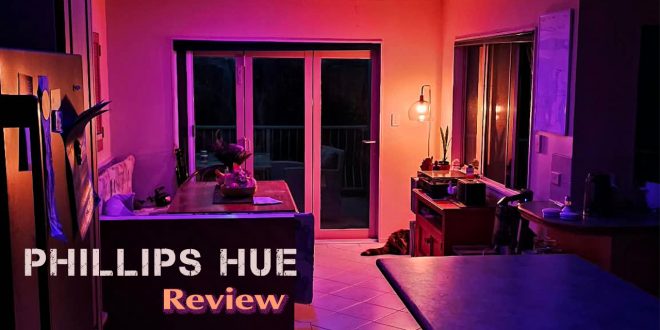
You guys will know from our past posts that we like setting vibes at our house, lighting is a great way to do that.
LED and other such lights have made a big advancement in home automation these days, it’s not just a lightbulb set to a colour anymore, there are hubs, and link-able devices and a host of themes to set the mood for any occasion. LED lights can be purchased from the big box stores and before you know it a room is transformed. This is being done at various levels of quality and Phillips have been leading that charge on being the premium offering for some time, we were lucky enough to get a starter set to try out.
Starter Packs
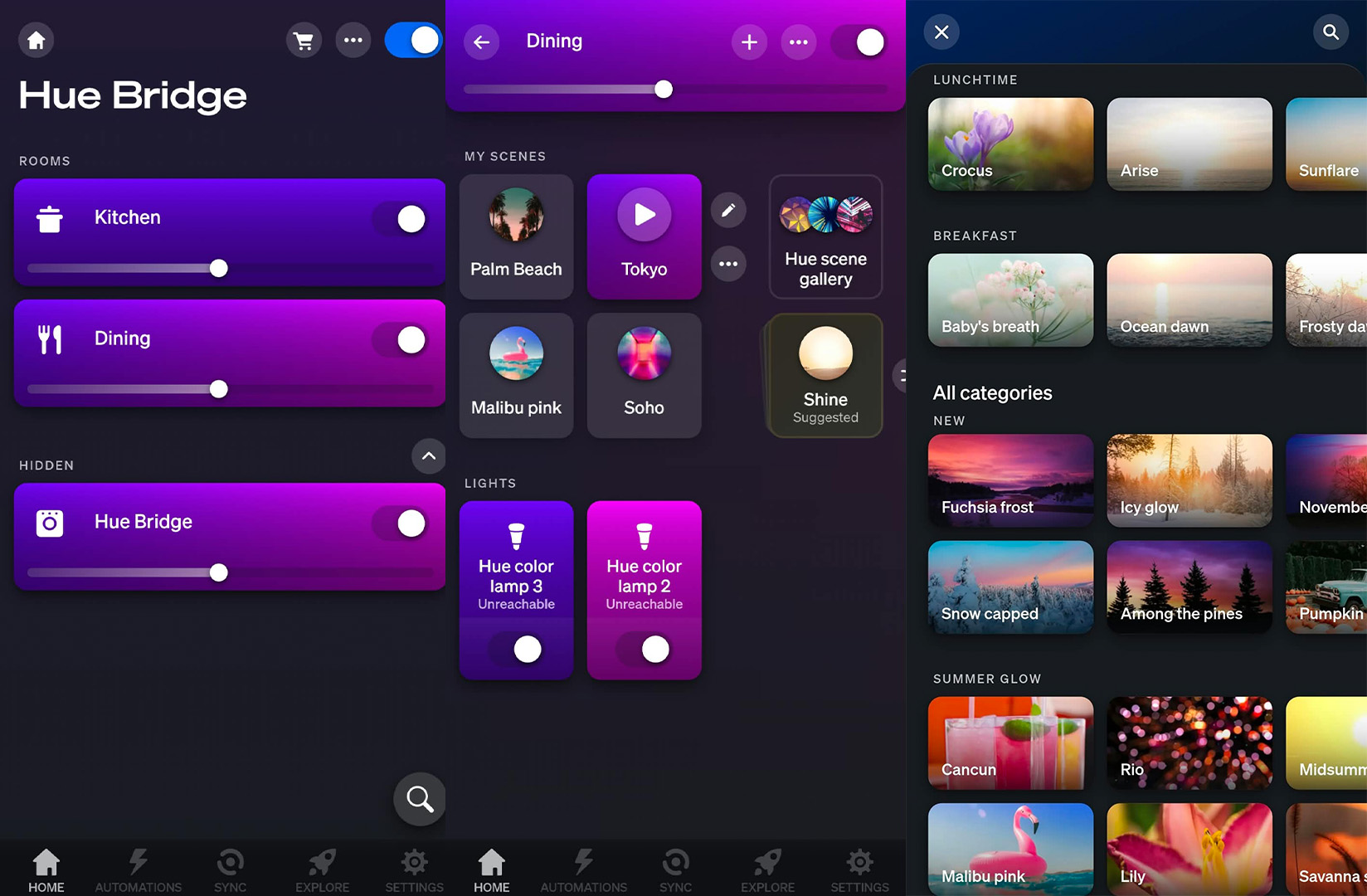
Phillips offer a 3 bulb pack that comes with the “Hue Bridge” which acts as a hub for your connected devices and a conduit for voice activation. The bulbs themselves are pretty unassuming, they look like frosted bulbs but its what they can do that is the impressive part. The Bridge will connect to your Wi-Fi and work with your voice activation and or home automation set ups so that you don’t even need a switch or the app, you can simply voice to your device and set any of your pre-set ideas or explore the galleries of pre-set moods.
Whats the big deal?
For our home, we look to “set a vibe” with more or less anything we do, we love entertaining and having parties, dinner parties and so on, but even if its just us Infront of the TV with a movie, we want to vibe with it. Having the ability to set moods and tones for day to day, or more apt – night to night, we like that we can change from useful white overhead light when we are trying to see what we are doing and then alternating it to something a bit more moody with a tap on an app. These will often sit ambient all the time however when the need arises we can bump up the amount of light, or change the room entirely. There’s science to suggest that certain colours have different effects on us, and if you’ve ever seen a submarine movie they are either red or green for night vision, we can do that in our kitchen now. Our goal with vibing our home is simple, get rid of as much overhead white light as possible and either replace it or find an alternative for ambient lighting, so far we’re doing pretty well with it as you might have seen in previous posts.
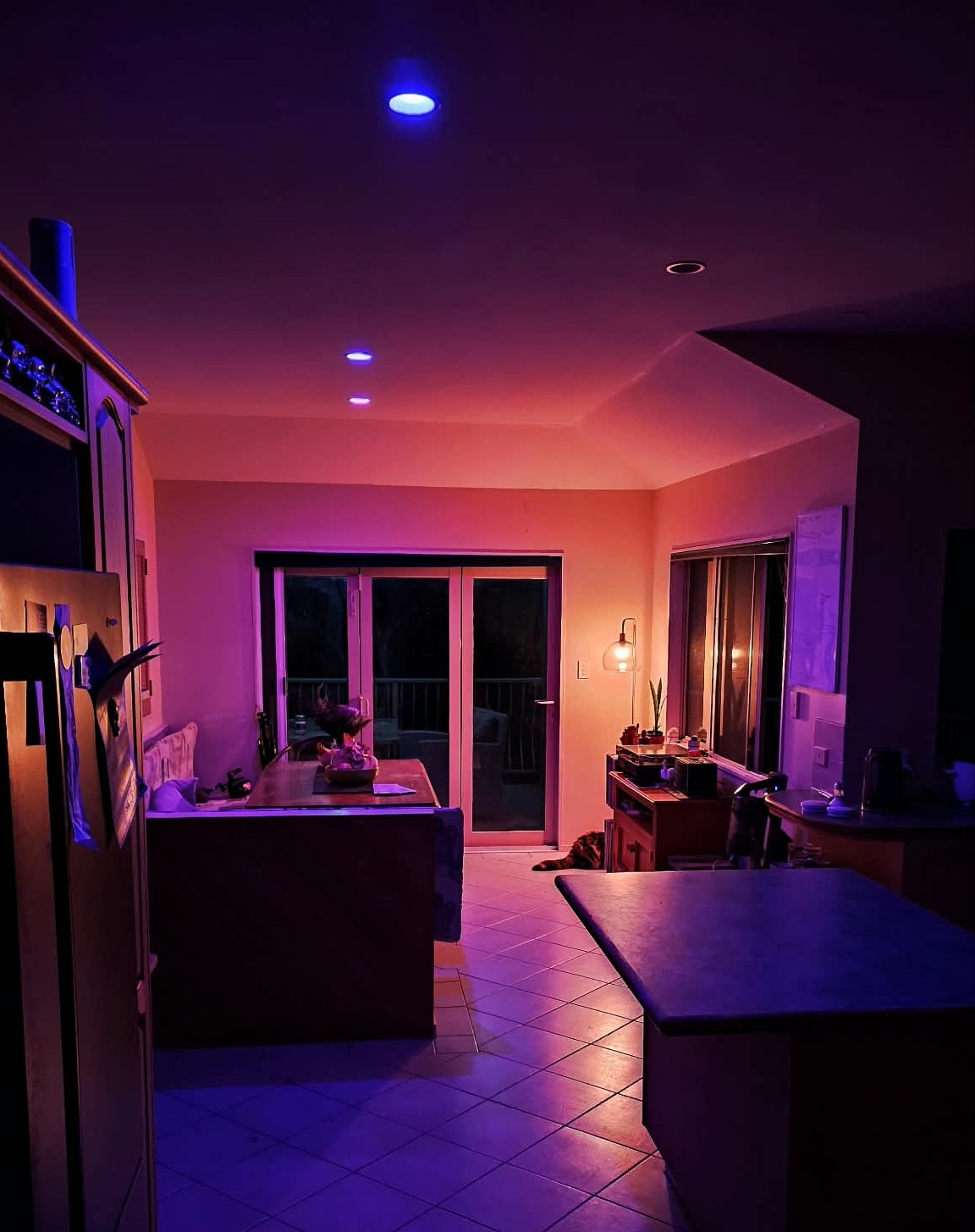
We set up this starter kit in our kitchen as its one of the more dynamic rooms in the house and certainly the most used, we all cook ( some better than others) and we all spend time in the kitchen as its also a social hub of the house. our lighting is split into 3 zones, we have our diner, over head and the “work light” which is 5 white bright halogens. So we put 2 of the 3 Hue bulbs over the diner and the 3rd lives on its own circuit above our kitchen island. Usually of an evening we leave the single Hue bulb on to give enough light to pass through the kitchen or do a simple task without creating so much light that its confronting when moving around the house from a light to dark area. Typically we keep the whole house on the darker side. Mostly we do this as a transition to sleep and avoid the overuse of artificial lighting that keeps you up at night and throws out your melatonin causing difficulties getting off to sleep.
The app comes pre-set with a number of moods, lately I’ve been on a pink/blue buzz as it feels very Vice City retro, however I have also walked into the kitchen and thought I was on a submarine when another flatmate is making all efforts to block blue light. if nothing else it keeps it interesting. When we have guests over of an evening we like to set up all of the lights into a cohesive mood for each area of the house. these 3 lights plus our floor lap ( which is currently dumb) set enough of a tone and are capable of providing more than enough light to suit any occasion from a warm intimate dinner in the diner or to be able to see snacks on the table while having a house party that feels like a vibe.
On top of all the things you can do to set the mood, you can also set protocols for example, if you want the lights to come on for you at a lower level and a warmer tone when you wake up, you can make them do that, if you want to set it up so that the vibe on Saturday nights is different from Monday through Friday, you can do that too. you can voice ” hey AI companion, its party time” and the whole host of connected devices will change to your pre-set.
Okay rad but what are the downsides?
Well, being the premium offering, the price. This base kit we were sent retails for $329 ( from Noel Leeming at the time of review) which for 3 bulbs and an interface sounds like a lot, because it is. Comparing these to other offerings, you are paying for more than just the physical product, there is a huge amount of R&D that goes into not only the products but the software that comes with it. The app is one of the best we’ve used and the set up is a breeze, people don’t realize how much work goes into making something very complicated, very easy. In a way, that’s what you are paying for with Phillips. The difference is, if you’re buying a single bulb for $20 from bunnings cause you want to change your bedside lamp colour, have at it. if you want true home automation, Phillips have done the work early which is why they are the name people go for when they want premium or plan on going deep down the same rabbit hole we have. The biggest downside with smart lighting is compatibility, We have Wiz lights you would have seen in previous reviews that do not sync with the Phillips lights. So we’ve segregated the rooms to be run on different systems, in an ideal world ( and a bit of pre planning) picking the brand that best suits your needs and budget would be a big recommendation from us. If you’re planning on a smart home build or retrofit Phillips will be the best and easiest ( in our findings so far)
Conclusion
Long story short, you get what you pay for and its worth staying within the same eco system.
It’s less fun having many apps from various hardware suppliers, having one tablet in the house for every thing from lights to music is the ideal, a seamless hub that can be accessed from your phone at anytime. In terms of quality the less ambitious products you’ll find at Bunnings for under $30 bucks for example, will be great if you only want that one thing to do one thing only, if that’s your jam have at it. I have a little neon nightlight from Typo that makes up the yellow in my bedroom at the moment, it does its one job well. But if you’re looking to build out a number of smart products and you want your lights to be able to talk to the fridge when you open the curtains ( yes you can do that, check our Samsung reviews) Then you need the ecosystem, that is how they get you indeed. Being in the eco system through out the house is ideal by a long long way, less fuss, more hand shaking between devices and less time dicking around with everything. Setting automations is also a really handy one. Being able to hit one button ( more or less) and telling the house its party time and queuing lights and music and the fireplace is pretty damn slick.
So far as we have tested, Hue is the benchmark to compare everything else to. You can check out the WIZ REVIEW for a more affordable but still awesome option


Latest posts by Nic (see all)
- Wind Therapy Update! and Chrome! - October 4, 2026
- Digger | Review - September 30, 2026
- Are peptides worth it? - September 29, 2026
- Phillips Hue | Review - September 13, 2026