 THE EMPIRE

Whilst recently planning out content for NZBlokes, it dawned on me just how jam-packed barbecue is with jargon. A lot of the terminology comes from the home of modern barbecue culture, the good ol’ US of A, you’ll also notice temperatures are often given in Fahrenheit for the same reason, and if you’re new to the game, some of the terminology can make barbecue sound far more complicated than it actually is.
Low and slow, hot and fast, offset, kettle, barrel, bark, the stall, wrapping, probe tender. Spend enough time around a smoker and you’ll hear all of them. The good news is that most barbecue chat is pretty straightforward once you understand what it means, so here are ten terms worth knowing.
1. LOW AND SLOW
Low and slow is the foundation of traditional barbecue and refers to cooking indirectly, away from the direct heat source, at a relatively low temperature for an extended period of time. A typical pit temperature is around 225–275°F (107–135°C), allowing tougher cuts of meat to gradually break down while developing flavour from the smoke, seasoning and cooking process.
It isn’t simply about getting the internal temperature of the meat to a particular number. The longer cooking time allows collagen and connective tissue to break down, transforming tougher cuts into tender barbecue.
The name really does say most of what you need to know: low temperature, long cooking time.
2. HOT AND FAST (indirect)
Hot and fast uses the same indirect cooking method, but with more fuel and increased airflow to raise the temperature and speed things up. A useful range is around 275–400°F (135–205°C), depending on the meat, cooker and the result you’re after.
For anyone who enjoys barbecue but doesn’t necessarily want to spend an entire day tending a smoker, hot and fast can be a very useful technique. It does require a little more attention to temperature control, particularly as you move towards the higher end of the range, so it’s worth building some confidence with your cooker before turning everything up.
There is no rule saying barbecue has to take twelve hours to be good.
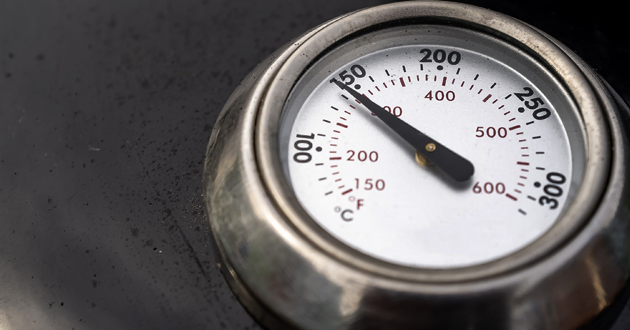
A pit temperature of 275°F+ is where the low-and-slow training wheels come off and the hot-and-fast approach kicks in, making barbecue a genuine after-work option!
3. LUMP CHARCOAL VS BRIQUETTES
Charcoal is one of the foundations of traditional barbecue, and you’ll generally come across two main types: lump charcoal and briquettes.
Lump charcoal is hardwood that has been carbonised, leaving behind mostly carbon. It lights relatively quickly, can burn hot and responds well to airflow adjustments, although the size and shape of the pieces can vary considerably.
Briquettes are manufactured charcoal formed into consistent shapes. Their uniform size makes them predictable to use and they generally provide a steady, longer-lasting heat, which can be particularly useful for extended cooks.
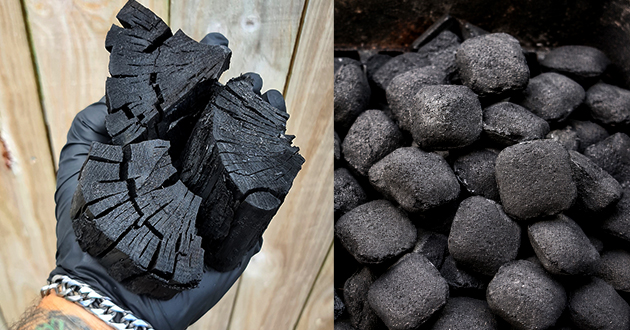
Lump (left), Briquettes (right): Neither is automatically better. They behave differently, and both have a place in barbecue.
4. OFFSET, KETTLE AND BARREL
These are three common types of barbecue cooker, although there are plenty of variations within each category. It really comes down to horses for courses – how much time you’ve got, the physical footprint of your cooking area, portability, versatility and, of course, budget. A lot of barbecuers eventually end up with at least one of each, just to cover all the bases. And then there are the weird folk who collect used stamps! At least barbecues have a bit of form and function to them, right? Well, that’s what we tell ourselves, as we justify “just one more!”
An offset smoker has a separate firebox positioned beside the main cooking chamber. The heat and smoke travel from the firebox through the cooking chamber and eventually out through the exhaust, allowing the meat to cook indirectly. This is the one for the patient pitmaster, properly run offsets are built for long, slow cooks, and 12-hour cooks are not uncommon. You’re managing the fire, temperature and airflow along the way, rather than simply setting a temperature and walking away.
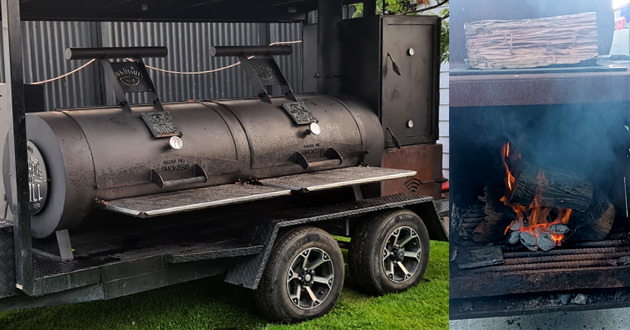
Offset Smokers: Offer a traditional low and slow approach to barbecue.
A kettle is the familiar round charcoal barbecue found in backyards all over the world. They are particularly versatile because they can be configured for direct or indirect cooking and, with good fire management, can and do produce excellent barbecue.
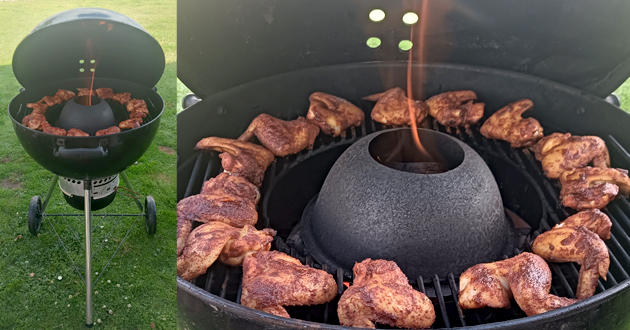
Kettles: Master the indirect options for larger cuts or fire it up and cook steaks directly! very versatile and a good way to cut-your-barbecue-teeth!
A barrel smoker uses a barrel-shaped cooking chamber, with the heat source generally positioned below or to one side of the meat. Some cookers, including Pit Barrel-style designs, use hooks to hang meat rather than placing everything on cooking racks. This can make very efficient use of the available cooking space, particularly when you’re feeding a crowd.

Barrel smokers: are simple, frugal on fuel, have a surprisingly large capacity and are built tough as! I use Pit Barrel Xs most days at The Barbecue Hut – Mangawhai. They make great use of the available cooking space, and with hooks for hanging meat, you can really pack them in when you’re feeding a crowd.
Different designs, different ways of managing the fire, but the basic objective remains the same: control the heat and cook the meat as intended.
5. THE STALL
The stall is one of the more frustrating parts of low and slow barbecue, particularly when you’re new to it and expecting the temperature of the meat to keep climbing steadily.
The stall usually occurs somewhere around 150–165°F (65–74°C) internal temperature. As moisture evaporates from the surface of the meat, it has a cooling effect that can temporarily balance out the heat entering the meat. The result is an internal temperature that appears to stop rising, sometimes for several hours.
It can be particularly frustrating when you’re watching a brisket sit at the same temperature while dinner time gets closer.
Higher cooking temperatures can significantly reduce the effect of the stall, which is one of the reasons hot and fast cooking can save considerable time.
6. BARK
Bark is the dark, crusty exterior that develops on the surface of meat during a barbecue cook. It is created through a combination of seasoning, smoke, heat, surface drying and chemical reactions such as the Maillard reaction.
The exact appearance of the bark will depend on the meat, seasoning, cooker and cooking method, but good bark should provide a deep, concentrated flavour and a texture that contrasts with the tender meat underneath.

For many barbecue cooks, getting the bark right is just as important as getting the meat tender. This brisket is simply seasoned with a light coating of salt, pepper and garlic (SPG), letting the smoke and beef do the talking.
7. THE WRAP
Once the bark has developed to the point you’re happy with it, you have several options for getting the meat through the final stage of the cook. The most common are butcher paper, aluminium foil and what is often referred to as the boating method.
Butcher paper protects the meat while still allowing some moisture to escape, whereas foil creates a much tighter seal, retaining more moisture and heat and generally speeding up the cooking process.
The boat method can be particularly useful when cooking hot and fast. Once the bark has set, place the meat into a sturdy oven tray with a small amount of liquid. For beef, barbecue sauce, butter with beef stock or a dark beer can work well, while zero-sugar cola is a useful option with pork.
Cover the tray tightly with good-quality foil and move it into an oven at 200°C (392°F).
This is where barbecue gets practical. Once the meat has been wrapped, the smoke has largely done its job, so there is little benefit in continuing to burn expensive charcoal simply to produce heat when the oven can do that part perfectly well.
Continue cooking until the meat is probe tender, then vent the foil to release the steam and allow the bark to firm back up before resting.
8. THE SMOKE RING
The smoke ring is the pinkish-red band that can form just beneath the surface of smoked meat, particularly on brisket, beef short ribs and other larger cuts of red meat. It tends to be less noticeable in chicken and pork, which contain less myoglobin, the protein responsible for the meat’s red colour.
It is formed through chemical reactions involving compounds produced during the combustion of wood and the myoglobin in the meat. Temperature, moisture, smoke and the chemistry of the meat all play a part.
Despite its impressive appearance, the smoke ring isn’t a reliable indication of flavour or barbecue quality. A great piece of barbecue can have little or no visible smoke ring, while a very pronounced smoke ring doesn’t guarantee that the meat has been cooked particularly well.
That said, when you slice into a brisket and see a nice smoke ring, it certainly looks the part.
9. PROBE TENDER
One of the biggest mistakes people make with barbecue is becoming too focused on a particular internal temperature and assuming that number automatically means the meat is ready.
Temperature is an important guide, but probe tenderness is ultimately what you’re looking for with tough barbecue cuts. Insert your thermometer probe or another suitable skewer into the meat and pay attention to the resistance. When the meat is ready, the probe should slide in with very little resistance, similar to pushing it into soft butter.
Different cuts and different cooking conditions can produce tender meat at slightly different temperatures, which is why probe tenderness is such a useful final test.
Don’t just cook to a number. Cook until the meat tells you it’s ready.
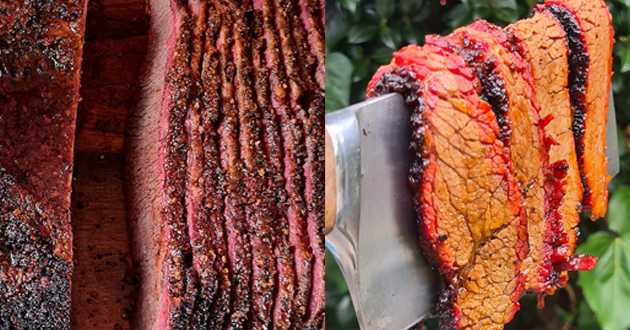
Start with a big chunk of “tough as old boots” meat, add a barbecue, plenty of smoke and a flavoursome bark, finish with probe-tender meat, and an aesthetically pleasing smoke ring, and congratulations! you’ve definitely done a barbecue thing. At this point, you’re legally allowed to start chatting like an old-time pitmaster.
10. REST
Once the meat is probe tender, resist the temptation to slice straight into it. Resting allows the temperature to settle and gives the meat time to retain and redistribute its juices before you start carving.
The larger the piece of meat, the more important this becomes. A brisket, pork shoulder or large roast needs considerably more resting time than a small steak, and allowing that time can make a noticeable difference to the final result.
And that’s the basics. You’re officially now part of the conversation.
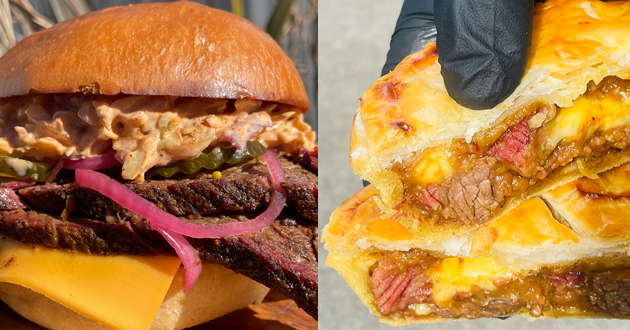
Looks good, tastes good, is good! We put barbecue to work in all sorts of ways at The Barbecue Hut – from meat and slaw boxes to burgers, toasties and pies.
Until the next one.
Get the coals fired up!
Kerren “Kezza” Packer
The Barbecue Hut – Mangawhai


Latest posts by Kerren Packer (see all)
- One Man’s Rubbish Is Another Man’s Barbecue! - October 6, 2026
- Barbecue Jargon You’ll Hear Around the Smoker! - September 29, 2026
- Fry Bread: The Ultimate BBQ Sidekick - February 12, 2026
- Smoking A “Fatty” Together… - September 24, 2025