 THE EMPIRE

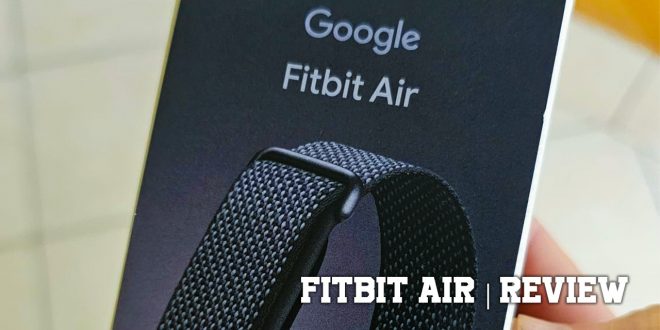
Fitbit sent out their Fitbit Air Fitness tracker, so here’s the review.
Let me preface with, I’ve never been a heart rate tracker, I just work till I feel like I’ve done the work. My fitness mostly revolves around lifting heavy shit and doing zero cardio, In that I am happy with what I am doing and achieving so I wasn’t looking for a wearable tech item to make it better. That being said this was an interesting exercise to see what these are about and what people actually use them for. It’s also important to note that the Fitbit itself is less the talking point as much as the App we were asked to use with it Google Health. It’s also worth mentioning we only had a limited time of a few days to try this out, more time would have given more learning we could have relayed to you guys.
FITBIT AIR
As mentioned, this part of the puzzle is the least interesting. It’s a sensor you wear on your wrist that will communicate with your phone and keep your app upto date with your vitals. The tracker itself does what it says on the tin. It is a small, subtle tech wearable that will not be too much of a hinderance whilst training, with the exception being that given this is worn on the wrist, things like lifting straps or wrist wraps will be harder to use, my work around with this was to loosen it and run it outside of the area on the forearm to keep the info working. It’s discrete enough to wear to sleep where most of the usefulness for me was found, unlike a watch that will be needing to be charged daily and is bulky when sleeping. The battery does last about a week and comes with a proprietary charger which is USB C
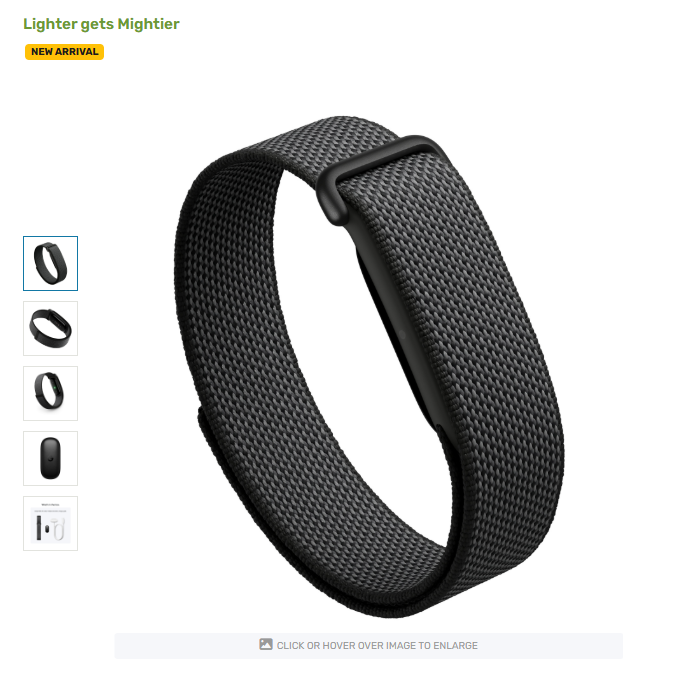
At $239, its not the most unreasonable thing to use for this and it gets bonus points for being as small as can be to the point where you’d forget about it if you weren’t addicted to the app. I have a couple smart watches that I never use because I don’t need them and I find it just more shit to charge. I’d rather leave my phone down and ignore it and I’ll look at it when I need to, my theory is “if its important they will call and I’ll feel that ringing”
THE APP – Google Health
Like many that have looked into using apps to track things like health, heartrate and so on, I was interested that this opportunity came across my desk, as someone whos regular in the gym, I thought “maybe this will be useful” So I dove into the app.
The first thing I noticed was annoyingly, there is no feature to randomly check in with your heartrate, you have to have set up the app EVERY TIME that you are doing an activity, and if you don’t the Ai will guess for you, more on that later. So once you’ve picked the activity from the list of things that are available on it, I chose powerlifting as I tend to only do resistance training and the results were interesting. I have done ( not for a while) the testing to see where my targets are for heartrate while working. The Fitbit was coming back with lower than expected results which the algorithm then throws into the mix of what it’s learnt and what you’ve told it to guesstimate what it is it things you’ve achieved in that day. I would say whilst they give you a baseline over time it’s not as accurate as it could be for someone that really wants to know. But lets assume this is the only and first time you’ve looked into tracking your fitness.
The app will give you a readout after you clock in and close your workout and give you feedback on how you did, how much time you spent in various heart rates over the duration and what it thinks you’ve burnt calorie wise.
And this is where it gets annoying. You have to manually enter all the information. all of it. Everything you eat, everything you drink and all of your activity. The only thing it seems to do unprompted or input is the sleep tracking. Now whilst that’s another set of tasks to do your own research, that’s the sorta thing that makes me not be interested enough to want to go to the extra effort of using it to its fullest. I didn’t track food I only tracked working out and sleep. The amount of information in the app is there to give you a good idea of how you’re tracking over longer periods of time but we didn’t get to see those results, the base of Cardio, steps, and sleepscore on the landing page of the app is the check in spot and gives a clear read out of what information its captured between the device and what you’ve added. and therein lay the problem.
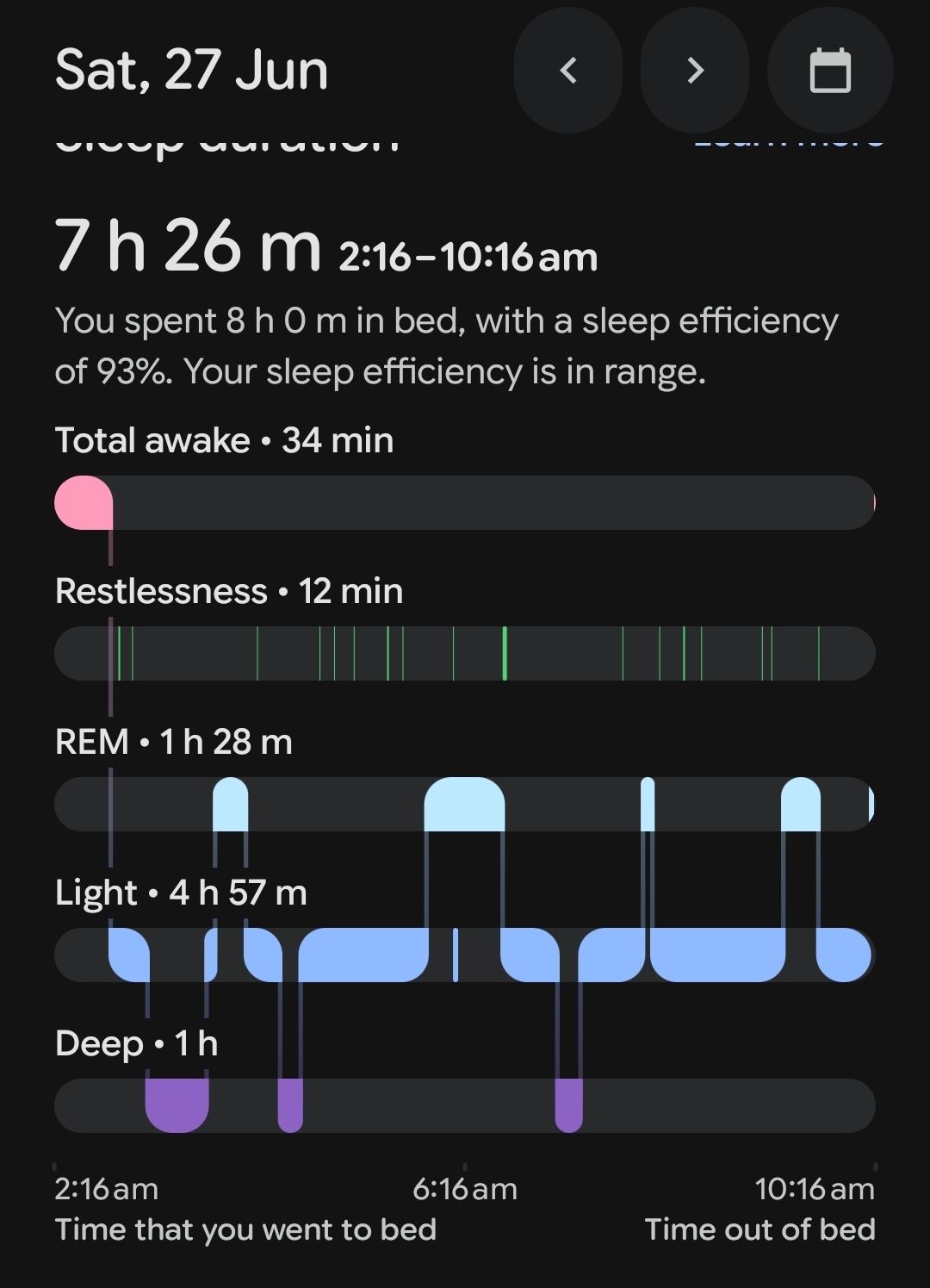
It only knows what you tell it, are you going to mention you smashed an entire bag of Peanut M&M’s cause you were baked and it was a Friday? I didn’t think so. so right out the gate, the only person you’re cheating there is yourself. Why go to all that effort of knowing only to not let it know. Not me though, I was very honest with the Ai companion about my sleep, my working out not so much my intake but my health choices as to regulating my nervous system through THC and other things like stretching, meditation and the like. Overtime the Ai will get to know you as a person and it’ll start giving you information based on its best guesses. and I don’t like that. The first morning after sleeping with it, it had a warning that my heart rate dropped dangerously low and that was an anxious read first thing in the morning.
The AI
I am not a fan of the Ai companion, And the apps like this can become addictive.
The problem with Ai, as mentioned is it only knows what you tell it and you’re unlikely to tell it the bad things, and that’s the first place you should be looking if you’re taking steps towards understanding your fitness. Whilst it can come up with a training routine for you that the Ai thinks is going to work best for you, its nothing on a personal trainer that knows your personally and can see through your bullshit. As I said, I put in all pertinent information regarding how I do what I do to see what it could come back with. It’s non judgemental and always has a positive and uplifting attitude towards what you tell it, in other words it allows enough grace to not make you think about accountability. I posted on our stories to see if there were other people using these sorts of Tech, I wanted to know what kind of people were using it and how, as I knew I wasn’t the target market for this. The biggest thing people actually seem to use it for it sleep tracking.
Let me ask you this, have you ever woken up and thought man that was a great sleep only to be told you got up or were restless and been told by someone else your sleep was different to what you expected? I feel like a lot of the information its prodivind isn’t anything we aren’t aware of, it just puts it in a simple, digestible package for us to sit back and analyse at a later time. and we all know what the goal is, solid 8 hours each night. I know if I got enough sleep as soon as I wake up I don’t need an app to tell me why I feel like crap, I already know I was up late stressed or over thinking. and this is all information your Ai companion is throwing into the mix of what its telling you it thinks you need.
Most people don’t struggle with knowing its the doing something about it.
In Conclusion
Can I recommend this to anyone? not really. There is a small window of people that will get something positive out of this. If you’re new to looking at your health and fitness and having a gimmick tech that will help you better understand long term tracking, sure. but outside of that I’d suggest most “gym people” which is my people, will already put time and effort into the thought process around what is going on in this app and not need it. IF you’re a high level athelte and you’re monitoring very closely, I’d recommend looking into other products and software that don’t sugar coat your findings. If having tech like this is the difference between getting active and not, have at it. Motivation can be found in the strangest places and for some this will be it. if that’s you, get it, get out there and do the thing. Strava for running is a widely used app that tracks your running and walking and gives more useful information and the best part is it shares with your peers so you can have a competitive nature to it.
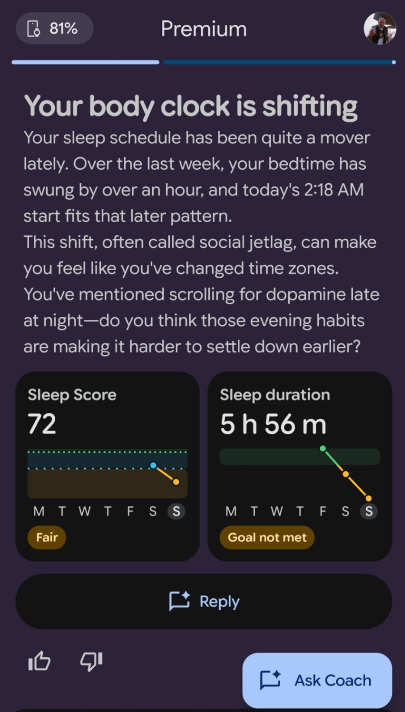
This won’t change your life, but it could be the thing that helps you change your life. if you embrace it. but it does come at a cost.
We’ve all heard the idea that we shouldn’t reach for our phone as soon as we wake up, nor should we be on it as we’re settling down for bed. This app will go against that theory. As soon as I’d wake up I’d reach for my phone and check how my sleep was to see if it stacked up against what I already knew. and before you know it you’re telling the Ai that its wrong and its trying to play catch up. Before you know it you’ve set your ideals for the days exercise and you’ve been on your phone for 15 mins before getting out of bed. These results and learnings can be addictive and I’ve noticed since talking to people that regularly use them that are the same kind of people that “have been meaning to get to the gym” but barely make steps. most people will do their daily steps without trying and focusing on one thing like that negates all the hard work I’d do in the gym. Even trying to go back and screenshot the app for this review, the information isn’t there, the Ai wont show me what I am asking which is a very basic ” show me last weeks sleep graph” and it just wont. This is a new thing I’ve learnt just now that looking back for comparison over time seems to be left to the Ai to let you know, instead of being able to self asses.
With anything like this, you need to be honest with yourself and ask if you’re going to be honest with the app. the only person you’re doing a disservice to is you if you try game the system. which most people that look for the excuses aren’t going to be. so, do with that as you will.
FitBit – 8/10 it does what it says on the tin, small and light. not overly expensive.
Google Health – 3/10 The app is so generalist and the Ai is out of touch with you as an individual.


Latest posts by Nic (see all)
- Street Fighter | Review - October 19, 2026
- Wind Therapy Update! and Chrome! - October 4, 2026
- Digger | Review - September 30, 2026
- Are peptides worth it? - September 29, 2026